Skip to content
New Georgia Encyclopedia
  • Home
  • Articles & Media
  • Browse by Topic
  • Browse Collections
  • Browse Georgia Standards
  • A-Z Index
  • Exhibitions
  • Educators
  • Browse    Chevron down
  • Exhibitions
  • Educators
By Topic Content Collections Georgia Standards A-Z Index Arrow right
  • Arts & Culture

    Arts & Culture

  • Business & Economy

    Business & Economy

  • Counties, Cities & Neighborhoods

    Counties, Cities & Neighborhoods

  • Education

    Education

  • Geography & Environment

    Geography & Environment

  • Government & Politics

    Government & Politics

  • History & Archaeology

    History & Archaeology

  • People

    People

  • Science & Medicine

    Science & Medicine

  • Sports & Outdoor Recreation

    Sports & Outdoor Recreation

Frankie Welch’s Americana
Featured

Frankie Welch’s Americana

Fashion and politics from Georgia-born designer Frankie Welch

Stamp Collection
Featured

Stamp Collection

Stamps honoring the political figures, artists, and culture of Georgia.

Recently Added
View All Arrow right
City Page: Atlanta

City Page: Atlanta

Stamp Collection

Stamp Collection

Frankie Welch’s Americana

Frankie Welch’s Americana

  • Georgia Studies

    Georgia Studies

    Eighth Grade
  • Georgia, My State

    Georgia, My State

    Second Grade
All Exhibitions Arrow right

Black Leaders of the Civil Rights Movement

The Black leaders of the civil rights movement came from a variety of backgrounds, but they were all united under a common goal—racial justice. Their work began well before the 1950s and continued far beyond the death in 1968 of Martin Luther King Jr.

Slater King and Irene Asbury Wright
Authored by Frances Helm, Georgia State University

Courtesy of Cochran Studios/A. E. Jenkins Photography

Introduction

Georgia has been home to a number of major figures who participated throughout the twentieth century in the struggle for civil rights. Many of these nonviolent activists rose to national attention during the 1950s and 1960s through their personal bravery and the public exposure they brought to injustices occurring in the South. However, it was not these activists alone who contributed to the advancement of civil rights—civil rights leaders also included lawyers, educators, ministers, and politicians who founded institutions to facilitate change and to support and educate those protesting in the streets. Their work began well before the 1950s and continued far beyond the death in 1968 of Martin Luther King Jr. The Black leaders of the civil rights movement came from a variety of backgrounds, but they were all united under a common goal—racial justice.

Albany Movement
1

Organizing Suffrage

The first half of the twentieth century saw the emergence of numerous organizations that would serve to advance Black suffrage and civil rights, the issues at the heart of the movement.

In 1918 Atlanta native Walter White, one of the most prominent African American spokesmen in the United States, joined the National Association for the Advancement of Colored People (NAACP) and contributed to the organization’s emergence as a crucial tool in the progression of civil rights. In 1929 White became the chief secretary of the NAACP, and through the organization he investigated race riots and exposed lynchings, thereby bringing wider attention to the civil rights cause.

Born in 1882, John Wesley Dobbs represented the emergence of socially conscious, Black middle-class leaders who viewed suffrage as the key to racial advancement. Dobbs’s goal was to instill ideas of equality and leadership in Atlanta’s African American community, and he experienced several successes during the 1940s. In 1946 Dobbs cofounded the Atlanta Negro Voters League, and at his urging Atlanta mayor William B. Hartsfield hired eight African American police officers for the city in 1948.

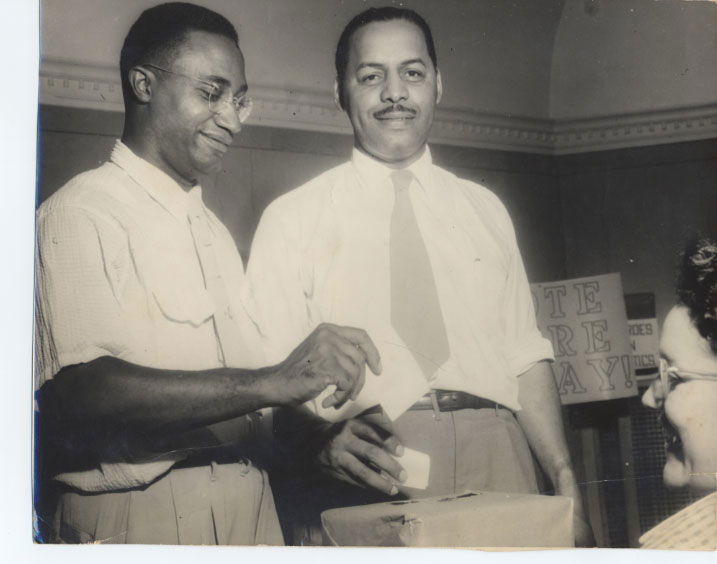
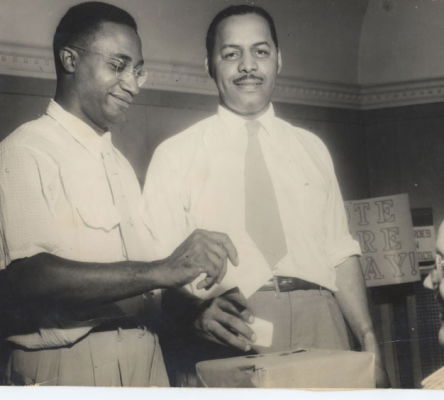
Active in the same period as Dobbs, Clarence A. Bacote was a political activist also striving to increase African Americans’ political participation. Bacote’s goal was to educate Black voters in Atlanta, and he achieved this through his work as chair of the Atlanta All-Citizens Registration Committee. Under Bacote’s guidance in 1946, the number of Black registered voters in Atlanta increased from 6,976 to 21,244 in fewer than five months.

One of the New South’s first Black political power brokers, civil rights attorney A. T. Walden assumed leadership roles in the Atlanta branch of the NAACP and the Atlanta Urban League, both significant institutions for the movement. He also cofounded the Atlanta Negro Voters League in 1949 and served in leadership positions for the All-Citizens Registration Committee.

Walter White
Clarence A. Bacote
Swearing in of A. T. Walden
2

The Self-Made Man

Civil rights professionals and activists were not always born into the Black middle class. Many fully understood the consequences of poverty and racism that were challenged by the movement, and their backgrounds provided unique perspectives that helped them to facilitate change.

Born into poverty in 1884, Benjamin Mays provides a clear example of the self-made man. Refusing to be defeated by his circumstances, Mays fought for the education necessary to become a minister, scholar, and social activist. He also assumed several leadership roles in various organizations of the civil rights movement. In 1940 Mays became president of Morehouse College in Atlanta. There, he mentored his most famous student, Martin Luther King Jr. Mays’s two main ideas were his belief in the dignity of all human beings and the incompatibility of American democratic ideals with American social practices. It was these social practices, including segregation, that the civil rights movement aimed to change.

Another self-made man, W. W. Law was born in Savannah and began working at the age of ten to help support his family. His civil rights activism began early, while he was in high school, and he credited his later success to his grandmother Lillie Belle Wallace, who instilled in him a love for reading and social justice. Law served as president of the Savannah chapter of the NAACP from 1950 to 1976 and became known (as was civil rights attorney Donald Hollowell) as “Mr. Civil Rights.” After his retirement, Law founded the Ralph Mark Gilbert Civil Rights Museum, named for his mentor and the pastor of First African Baptist Church in Savannah.

These men, and others like them, served as models and inspiration for members of their own and subsequent generations of civil rights activists.

Benjamin Mays
W. W. Law, Leader of NAACP
3

Legal Standing

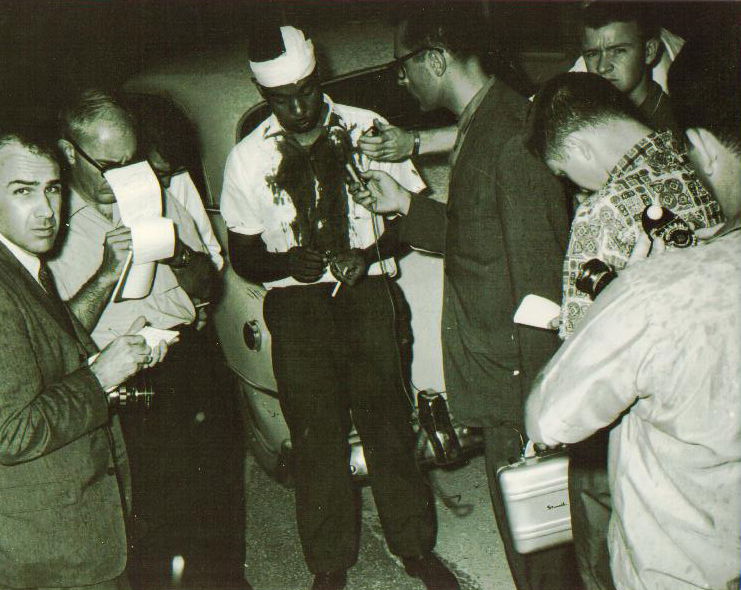
To achieve changes in social practices, African Americans needed members of their own community in positions of legal power. C. B. King, one of the few Black lawyers in Georgia during the 1950s, became an inspiration to generations of lawyers and activists. King repeatedly came into the firing line of white racism while defending civil rights activists, but this did not deter him. Providing further legal backing, Leroy Johnson in 1962 became the first African American to be elected to the Georgia General Assembly since Reconstruction.

The desegregation of education was essential on the road to equality, and this cause was taken up by Donald Hollowell. As one of only a handful of Black lawyers practicing civil rights law in the 1950s and 1960s, Hollowell became the most prominent attorney for social justice, gaining the nickname “Mr. Civil Rights.” In addition to representing Martin Luther King Jr. in court, Hollowell achieved a momentous victory against the University of Georgia with regard to state-sanctioned segregation in 1956. Horace T. Ward, who later became the first African American to serve as a judge on the federal bench in Georgia, also came into conflict with UGA as he challenged the university’s segregationist policies. His efforts contributed to the admission of two African American students in 1961.

Grace Towns Hamilton was the first African American woman to be elected to the Georgia General Assembly in 1965. Hamilton began her career as a teacher and helped to develop interracial programs on numerous college campuses. In 1943 she was appointed executive director of the Atlanta Urban League and strove for advances in education, voting rights, and health care for African Americans. During her career in the Georgia legislature, Hamilton worked to expand political representation for African Americans in the South, becoming known to her peers as “the most effective woman legislator the state has ever had.”

These individuals contributed to an African American legal support system that had emerged to defend the civil rights movement. This development was crucial, since the legality of customs supporting white supremacy was a major obstacle to bringing about change.

C. B. King after Beating
Leroy Johnson
King and Hollowell
Hamilton Holmes
4

The Kings

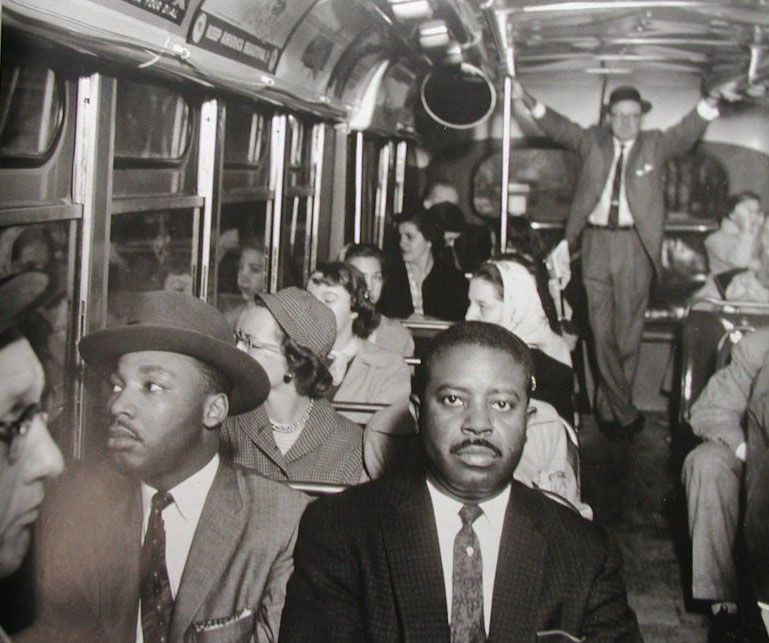
Martin Luther King Jr., an Atlanta native, first became involved in the civil rights movement in Montgomery, Alabama, where he headed the Montgomery Improvement Association and, with activist Ralph David Abernathy, organized the Montgomery bus boycotts in 1955. The boycotts led to the U.S. Supreme Court ruling in 1956 that segregation on Montgomery buses was unconstitutional.

In August 1957 King and Abernathy launched the Southern Christian Leadership Conference (SCLC) in Atlanta, with King serving as president. Over the next decade, King led the March on Washington in 1963, which promoted the importance of equality and jobs for African Americans, and carried on the work for suffrage begun by Dobbs and Bacote. In 1965 he was present when U.S. president Lyndon B. Johnson signed the Voting Rights Act into federal law. King worked tirelessly to reinforce his nonviolent approach in the face of rising Black power but was shot dead in 1968 while supporting a workers’ strike in Memphis, Tennessee.

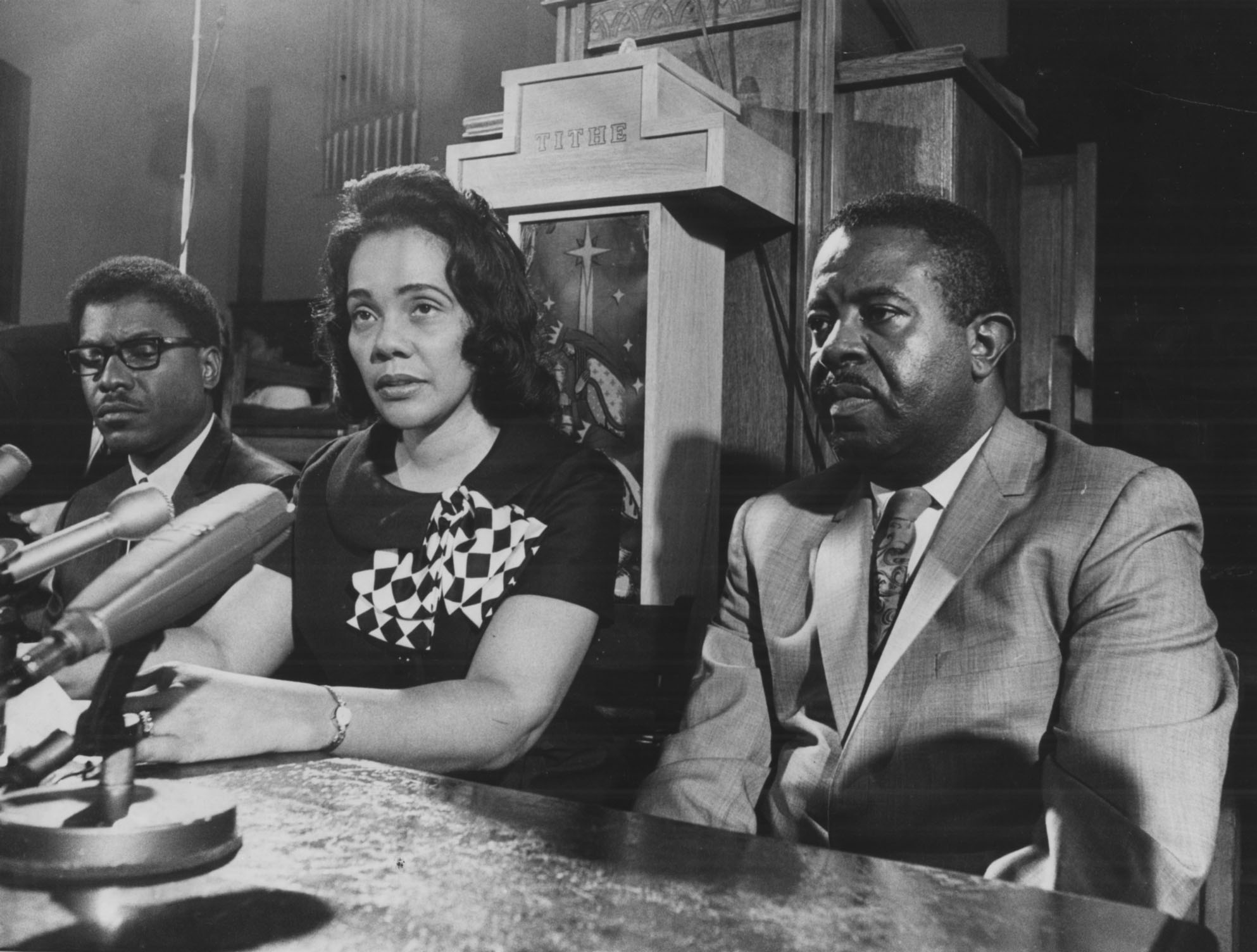
King’s wife, Coretta Scott King, was an influential activist in her own right. Scott King was present at both the March on Washington in 1963 and the Selma to Montgomery march in Alabama in 1965, and she often used her singing talents to raise funds for these protests. Other women, including Bernice Johnson Reagon, also used the power of music to express their support for the civil rights movement.

Scott King traveled to India with her husband in 1959 to study the philosophy of civil disobedience pioneered by Mahatma Gandhi decades earlier, but her focus remained in the South. She went to Memphis immediately after her husband’s death to oversee the march that he had been planning and soon thereafter established the King Center in Atlanta to honor his life and work. She later worked for the National Organization for Women on the Equal Rights Amendment, and in the 1980s she worked with anti-apartheid groups in South Africa, where she established friendships with both Winnie and Nelson Mandela. In recognition of her contributions, Scott King became the first woman and the first African American after her death to lie in state at the capitol rotunda in Atlanta.

SCLC Leaders Marching
Ralph David Abernathy and Martin Luther King Jr.
Coretta Scott King
5

Activism in the Movement

The work on the ground during the 1950s and 1960s is one of the best-known stories of the civil rights movement. The activism of those who took to the streets in Georgia is represented by the careers of two significant figures.

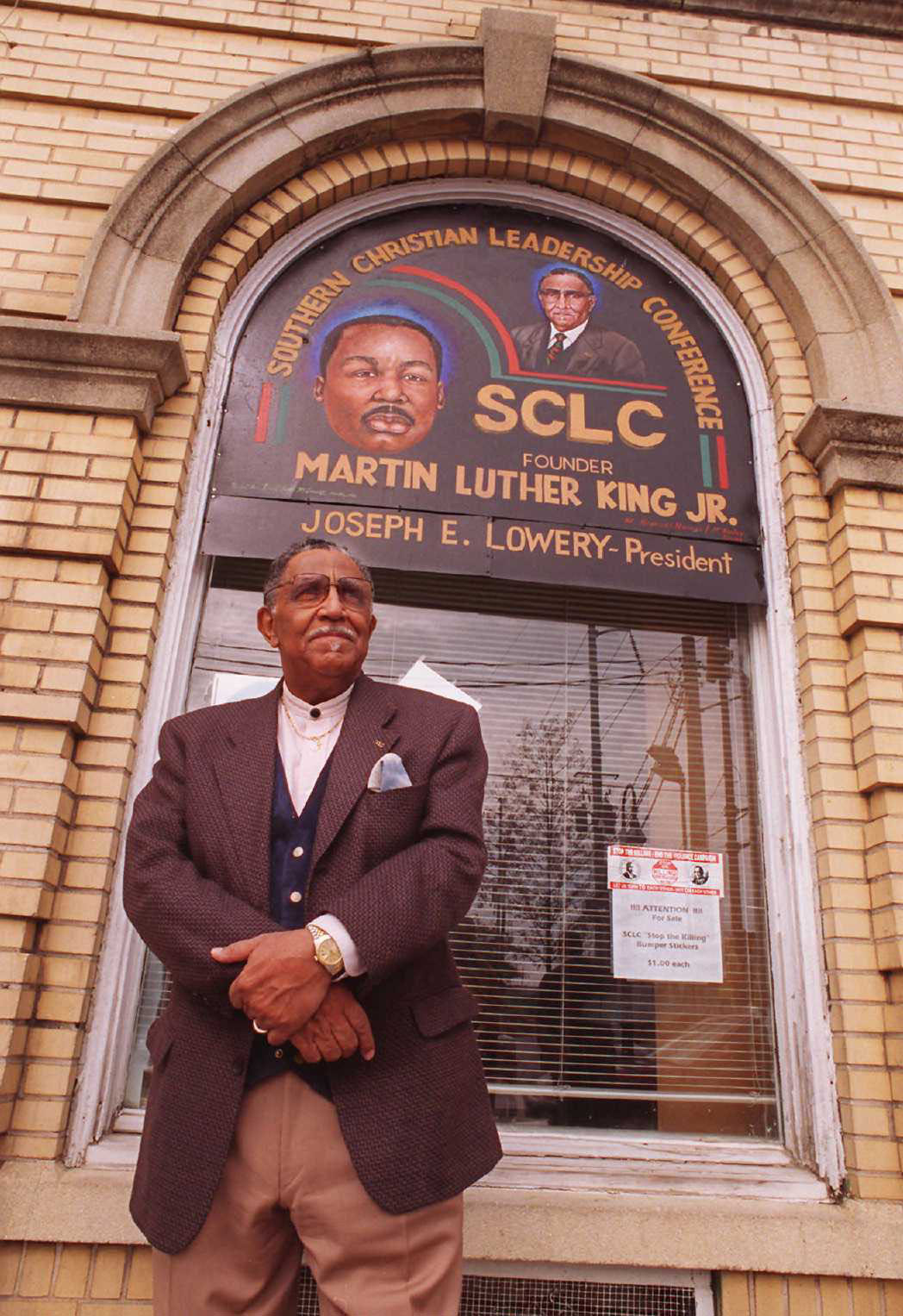
Inspired by the Montgomery bus boycotts, the Methodist minister Joseph Lowery, known as the “dean of the civil rights movement,” led a successful drive against the segregated bus system in Mobile, Alabama. A cofounder of the SCLC, Lowery remained an active participant in the organization for decades. In 1968 he moved to Atlanta, where he worked with the SCLC to increase Black voter registration, and from 1977 to 1997 he served as the organization’s president. In 2009 he delivered the benediction at the inaugural ceremony of Barack Obama, the nation’s first African American president.

Hosea Williams was a pastor and a vocal political activist. During the early 1960s he served as vice president of the NAACP in Savannah. Working with W. W. Law, the president of the chapter, he coordinated protests that led to Savannah becoming the first Georgia city to desegregate its lunch counters. In 1965 Williams, along with activist John Lewis, organized the historic Selma to Montgomery march in Alabama, which televised to the entire nation the police brutality toward peaceful protesters. Williams later organized the 1987 Brotherhood March in then all-white Forsyth County to honor Martin Luther King Jr.

Joseph Lowery
Lowery at Lockheed Martin Protest
Hosea Williams
Hosea Williams
6

Civil Rights as Big Business

With the growth of Atlanta and other cities in the South, African Americans began to use business and academia to aid social change in ways other than protests and demonstrations.

In 1960 businessman Jesse Hill and Atlanta Urban League executive director Grace Towns Hamilton produced a survey entitled “A Second Look: The Negro Citizen in Atlanta.” This document questioned the predominant belief in the white community that Atlanta, known as “the City Too Busy to Hate,” was a shining beacon for racial harmony in the South. Hill went on to challenge college segregation in Georgia by recruiting African American students Hamilton Holmes and Charlayne Hunter to apply to the University of Georgia. With Hill’s backing, the two were admitted in 1961, thereby integrating UGA.

As president of Atlanta Life Insurance Company from 1973 to 1992, Hill promoted civil rights in Georgia and Alabama by raising money and exposure for the movement. The Reverend William Holmes Borders, pastor of Wheat Street Baptist Church in Atlanta and a key advocate of the relationship between economic freedom and civil rights, worked with Hill to gain donations from Atlanta Life. These funds allowed Borders’s church to construct low-income housing for the African American community.

Borders’s project influenced others to work toward economic independence as well. Slater King, vice president of the Albany Movement and an Albany real estate broker, worked throughout the 1960s to promote socioeconomic development through home ownership in Dougherty County.

Atlanta Leaders
Hunter and Holmes, UGA
Walden and Borders
Albany Movement
Slater King and Irene Asbury Wright
7

The Civil Rights Legacy

Rather than causing the civil rights movement to dissolve, the assassination of Martin Luther King Jr. in 1968 galvanized a new wave of activists, politicians, and academics to carry forward the civil rights mission for the remainder of the twentieth century and beyond.

Andrew Young had worked under King in the SCLC, but when King was murdered, Young used the tragedy to strengthen his own voice politically. In 1972 Young became the first African American since Reconstruction to be elected from Georgia to the U.S. Congress. The voter registration campaigns that Young and his wife, Jean Childs Young, helped to organize throughout the South in the 1950s and 1960s also bore fruit, resulting in the election of thousands of African American candidates to higher office over the ensuing decades.

Similarly, John Lewis became a groundbreaking figure in southern politics after retiring from his position as chair of the Atlanta Student Nonviolent Committee (SNCC) in 1966. In 1986 Lewis won a seat in the U.S. House of Representatives and served as a U.S. congressman for more than thirty years until his death in 2020. Julian Bond also experienced great political success following his involvement with SNCC, being reelected into the Georgia state legislature more times than any other Black Georgian by the time he retired in 1986.

The prominent African American lawyer Vernon Jordan, in addition to being the field director of the NAACP, became executive director in 1970 of the United Negro College Fund, which raised $10 million in his first year. Two years later, Jordan also became executive director of the National Urban League, which works to secure economic self-reliance, parity, and civil rights for African Americans.

Andrew and Jean Childs Young
John Lewis and Julian Bond
Vernon Jordan

Cite this Article

Helm, Frances. "Black Leaders of the Civil Rights Movement." New Georgia Encyclopedia, last modified August 23, 2021. https://www.georgiaencyclopedia.org/exhibition/black-leaders-of-the-civil-rights-movement/

Helm, F. (2019). Black Leaders of the Civil Rights Movement. In New Georgia Encyclopedia. Retrieved August 23, 2021, from https://www.georgiaencyclopedia.org/exhibition/black-leaders-of-the-civil-rights-movement/

Helm, Frances. "Black Leaders of the Civil Rights Movement." New Georgia Encyclopedia, 21 October 2019, https://www.georgiaencyclopedia.org/exhibition/black-leaders-of-the-civil-rights-movement/.

Star

Featured Content

Harriet Powers

Harriet Powers

People
Civil Rights Movement

Civil Rights Movement

Mid- to Late 20th Century Topics
Trending

Trending

Georgia Guidestones

Georgia Guidestones

Sites & Museums
CNN

CNN

Television
Ted Turner

Ted Turner

People
James D. Bulloch

James D. Bulloch

People
Clock

Updated Recently

Morris Brown College

Morris Brown College

3 days ago
Burke County

Burke County

3 days ago
CNN

CNN

3 days ago
Ted Turner

Ted Turner

1 week ago

A More Perfect Union

The New Georgia Encyclopedia is supported by funding from A More Perfect Union, a special initiative of the National Endowment for the Humanities.

Learn More
New Georgia Encyclopedia
ISSN 2765-8732
Project Partners
logo-press UGA Press logo-galileo GALILEO logo-humanities Georgia Humanities logo-seal Office of the Governor logo-libraries UGA Libraries
Articles & Media
  • Browse by Topic
  • Content Collections
  • Georgia Standards
Special Content
  • Quizzes
  • Exhibitions
  • Spotify Playlists
  • Georgia Exhibits
  • Educator Resources
About
  • The Project
  • The People
  • Sponsors & Partners
Editorial
  • Our Process
  • Contributor Info
  • Permissions & Use
Stay in Touch
Facebook Instagram Twitter Contact Us
Donate to the NGE

Your support helps us commission new entries and update existing content.

Donate

© 2004–2026 Georgia Humanities, University of Georgia Press

  • Terms of Use
  • Privacy Policy
Loading
Image

Media gallery

Albany Movement

Albany Movement

  • Info Details
  • Citation Terms of Use

Protesters march down Broad Street in Albany during the Albany Movement, one of the largest civil rights campaigns in Georgia. From 1961 to 1962 Black residents protested the city's segregationist practices. Around 1,200 protesters were imprisoned as a result of their activities during the movement.

Courtesy of Georgia Archives, Vanishing Georgia, #dgh231-86.

View on partner site

The New Georgia Encyclopedia does not hold the copyright for this media resource and can neither grant nor deny permission to republish or reproduce the image online or in print. Requests for permission to publish or reproduce the resource should be submitted to the Georgia Archives.

Walter White

Walter White

  • Info Details
  • Citation Terms of Use

A prominent African American figure and spokesperson during the early civil rights years, Walter White served as chief secretary of the NAACP from 1929 to 1955.

Courtesy of Library of Congress, Prints and Photographs Division, Farm Security Administration - Office of War Information Photograph Collection, #LC-USF34-013342-C.

The New Georgia Encyclopedia does not hold the copyright for this media resource and can neither grant nor deny permission to republish or reproduce the image online or in print. All requests for permission to publish or reproduce the resource must be submitted to the rights holder.

Clarence A. Bacote

Clarence A. Bacote

  • Info Details
  • Citation Terms of Use

As chair of the Atlanta All-Citizens Registration Committee in 1946, Clarence A. Bacote (right) increased the number of Black registered voters in Atlanta from 6,976 to 21,244.

Courtesy of Atlanta University Center, Robert W. Woodruff Library Archives.

The New Georgia Encyclopedia does not hold the copyright for this media resource and can neither grant nor deny permission to republish or reproduce the image online or in print. All requests for permission to publish or reproduce the resource must be submitted to the Atlanta University Center Robert W. Woodruff Library and Archives Research Center.

Swearing in of A. T. Walden

Swearing in of A. T. Walden

  • Info Details
  • Citation Terms of Use

Atlanta mayor Ivan Allen (right) swears in A. T. Walden as judge of the Atlanta Municipal Court on February 3, 1964. Walden, the first Black judge appointed in Georgia following Reconstruction, served as president of Atlanta's NAACP branch from 1924 to 1936.

Courtesy of Atlanta Journal-Constitution.

The New Georgia Encyclopedia does not hold the copyright for this media resource and can neither grant nor deny permission to republish or reproduce the image online or in print. All requests for permission to publish or reproduce the resource must be submitted to the Atlanta Journal-Constitution.

Benjamin Mays

Benjamin Mays

  • Info Details
  • Citation Terms of Use

Benjamin Mays, president of Morehouse College from 1940 until 1967, attends a birthday party in his honor on August 11, 1973.

Courtesy of Atlanta History Center.

The New Georgia Encyclopedia does not hold the copyright for this media resource and can neither grant nor deny permission to republish or reproduce the image online or in print. Requests for permission to publish or reproduce the resource should be submitted to the Atlanta History Center.

W. W. Law, Leader of NAACP

W. W. Law, Leader of NAACP

  • Info Details
  • Citation Terms of Use

W. W. Law, standing in front of the King-Tisdell Cottage in Savannah, became the leader of the state NAACP in 1955. Law was reelected eight times.

Courtesy of Atlanta Journal-Constitution.

The New Georgia Encyclopedia does not hold the copyright for this media resource and can neither grant nor deny permission to republish or reproduce the image online or in print. All requests for permission to publish or reproduce the resource must be submitted to the Atlanta Journal-Constitution.

C. B. King after Beating

C. B. King after Beating

  • Info Details
  • Citation Terms of Use

An injured C. B. King, in 1962, talks to reporters after being caned by Dougherty County sheriff Cull Campbell in the sheriff's office. King had visited the county jail to check on an injured white demonstrator, William Hansen. Hansen's jaw had been broken in a beating he received when he was put in a cell with other white prisoners who objected to the civil rights protests.

Courtesy of Cochran Studios/A. E. Jenkins Photography

The New Georgia Encyclopedia does not hold the copyright for this media resource and can neither grant nor deny permission to republish or reproduce the image online or in print. All requests for permission to publish or reproduce the resource must be submitted to the rights holder.

Leroy Johnson

Leroy Johnson

  • Info Details
  • Citation Terms of Use

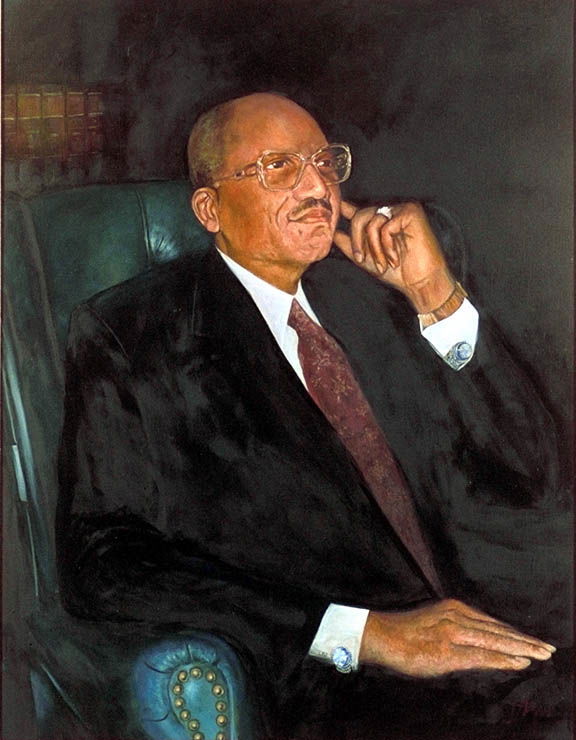
Leroy Johnson desegregated the Georgia General Assembly when he won his seat in 1962 and went on to become one of Georgia's most powerful state senators. During his tenure, Johnson revised the literacy test for voting rights, making voting more accessible to all citizens of Georgia.

Courtesy of Georgia Capitol Museum, University of Georgia Libraries

The New Georgia Encyclopedia does not hold the copyright for this media resource and can neither grant nor deny permission to republish or reproduce the image online or in print. All requests for permission to publish or reproduce the resource must be submitted to the rights holder.

King and Hollowell

King and Hollowell

  • Info Details
  • Citation Terms of Use

Attorney C. B. King (left) with attorney Donald L. Hollowell (center), who worked to gain admittance of Hamilton Holmes and Charlayne Hunter to the University of Georgia.

Courtesy of Cochran Studios/A. E. Jenkins Photography

The New Georgia Encyclopedia does not hold the copyright for this media resource and can neither grant nor deny permission to republish or reproduce the image online or in print. All requests for permission to publish or reproduce the resource must be submitted to the rights holder.

Hamilton Holmes

Hamilton Holmes

  • Info Details
  • Citation Terms of Use

In 1961 Hamilton Holmes (center) became one of the first African American students to gain admission to the University of Georgia after a two-year legal battle, led in part by Donald Hollowell (left). Holmes's father, Alfred "Tup" Holmes (right), was an Atlanta businessman.

Courtesy of Atlanta Journal-Constitution.

The New Georgia Encyclopedia does not hold the copyright for this media resource and can neither grant nor deny permission to republish or reproduce the image online or in print. All requests for permission to publish or reproduce the resource must be submitted to the Atlanta Journal-Constitution.

SCLC Leaders Marching

SCLC Leaders Marching

  • Info Details
  • Citation Terms of Use

Ralph David Abernathy (second from left) marches with Coretta Scott King and Martin Luther King Jr. (center) in 1966 on the Georgia state capitol. All were influential leaders during the early years of the Southern Christian Leadership Conference.

Courtesy of Atlanta Journal-Constitution.

The New Georgia Encyclopedia does not hold the copyright for this media resource and can neither grant nor deny permission to republish or reproduce the image online or in print. All requests for permission to publish or reproduce the resource must be submitted to the Atlanta Journal-Constitution.

Ralph David Abernathy and Martin Luther King Jr.

Ralph David Abernathy and Martin Luther King Jr.

  • Info Details
  • Citation Terms of Use

Ralph David Abernathy (right) and Martin Luther King Jr. were central organizers of the Montgomery bus boycott, which demanded that Black passengers be treated fairly on public transportation. 

Courtesy of David Fankhauser

The New Georgia Encyclopedia does not hold the copyright for this media resource and can neither grant nor deny permission to republish or reproduce the image online or in print. All requests for permission to publish or reproduce the resource must be submitted to the rights holder.

Coretta Scott King

Coretta Scott King

  • Info Details
  • Citation Terms of Use

Coretta Scott King, sitting beside Ralph David Abernathy (right) at Ebenezer Baptist Church in Atlanta, speaks to the press after the assassination of her husband, Martin Luther King Jr., in 1968. For nearly forty years after her husband's death, King continued to promote their shared vision of equality and nonviolence.

Courtesy of Atlanta Journal-Constitution.

The New Georgia Encyclopedia does not hold the copyright for this media resource and can neither grant nor deny permission to republish or reproduce the image online or in print. All requests for permission to publish or reproduce the resource must be submitted to the Atlanta Journal-Constitution.

Joseph Lowery

Joseph Lowery

  • Info Details
  • Citation Terms of Use

Joseph Lowery stands before the SCLC headquarters in Atlanta. In 1977 Lowery succeeded Ralph David Abernathy as president of the SCLC, which has been based in Atlanta since its inception in 1957.

Courtesy of Atlanta Journal-Constitution.

The New Georgia Encyclopedia does not hold the copyright for this media resource and can neither grant nor deny permission to republish or reproduce the image online or in print. All requests for permission to publish or reproduce the resource must be submitted to the Atlanta Journal-Constitution.

Lowery at Lockheed Martin Protest

Lowery at Lockheed Martin Protest

  • Info Details
  • Citation Terms of Use

Joseph Lowery voices his dismay on February 22, 2000, over alleged racial discrimination practices at Lockheed Martin. Behind him are Lockheed workers who came to lend support to the protest.

Courtesy of Atlanta Journal-Constitution.

The New Georgia Encyclopedia does not hold the copyright for this media resource and can neither grant nor deny permission to republish or reproduce the image online or in print. All requests for permission to publish or reproduce the resource must be submitted to the Atlanta Journal-Constitution.

Hosea Williams

Hosea Williams

  • Info Details
  • Citation Terms of Use

Hosea Williams, a civil rights leader in both Savannah and Atlanta, speaks at a rally in 1974. In 1963 Williams joined the Southern Christian Leadership Conference and worked with Martin Luther King Jr. until King's assassination in 1968. Williams continued to work with the SCLC until 1979.

Courtesy of Atlanta Journal-Constitution.

The New Georgia Encyclopedia does not hold the copyright for this media resource and can neither grant nor deny permission to republish or reproduce the image online or in print. All requests for permission to publish or reproduce the resource must be submitted to the Atlanta Journal-Constitution.

Hosea Williams

Hosea Williams

  • Info Details
  • Citation Terms of Use

Hosea Williams led two demonstration marches in Forsyth County in 1987. The first march, held in celebration of the Martin Luther King Jr. holiday, was attacked by several hundred members of the Ku Klux Klan. The second march, attended by Coretta Scott King, was held in protest of Klan activities in the county.

Courtesy of Atlanta Journal-Constitution.

The New Georgia Encyclopedia does not hold the copyright for this media resource and can neither grant nor deny permission to republish or reproduce the image online or in print. All requests for permission to publish or reproduce the resource must be submitted to the Atlanta Journal-Constitution.

Atlanta Leaders

Atlanta Leaders

  • Info Details
  • Citation Terms of Use

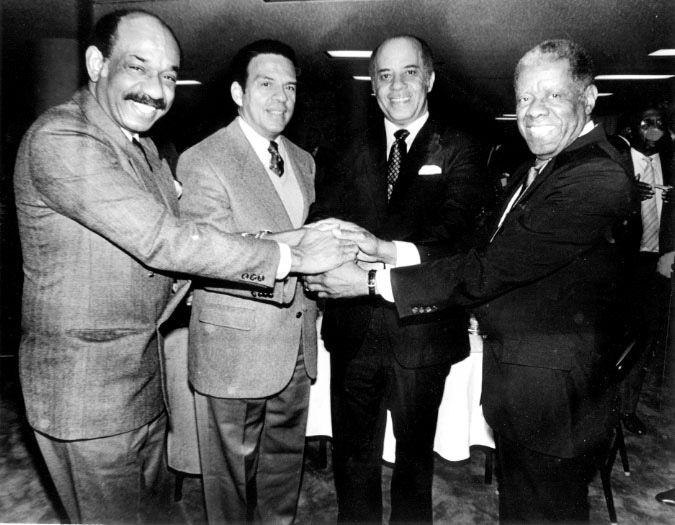
Three prominent civil rights leaders from Atlanta gather in 1987 to endorse the candidacy of Richard Arrington Jr. for mayor of Birmingham, Alabama. Arrington won the election to become the first Black mayor of that city. From left, Herman J. Russell, Andrew Young, Richard Arrington, and Jesse Hill.

Courtesy of Archives Division, Auburn Avenue Research Library on African American Culture and History, Atlanta–Fulton Public Library System, Harmon Perry Photograph Collection.

The New Georgia Encyclopedia does not hold the copyright for this media resource and can neither grant nor deny permission to republish or reproduce the image online or in print. All requests for permission to publish or reproduce the resource must be submitted to the rights holder.

Hunter and Holmes, UGA

Hunter and Holmes, UGA

  • Info Details
  • Citation Terms of Use

Charlayne Hunter and Hamilton Holmes, the first Black students to enroll at the University of Georgia, are pictured here at the end of their first day on campus in January 1961.

Courtesy of Atlanta Journal-Constitution.

The New Georgia Encyclopedia does not hold the copyright for this media resource and can neither grant nor deny permission to republish or reproduce the image online or in print. All requests for permission to publish or reproduce the resource must be submitted to the Atlanta Journal-Constitution.

Walden and Borders

Walden and Borders

  • Info Details
  • Citation Terms of Use

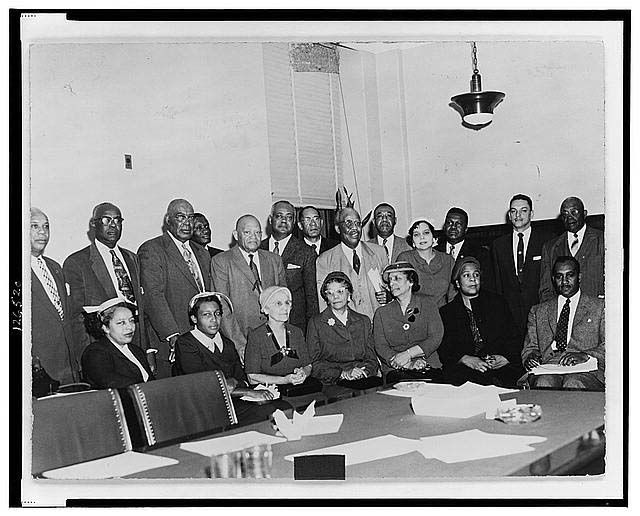
Members of the National Association for the Advancement of Colored People gather in February 1957 for civil rights hearings held before the U.S. Senate in Washington, D.C. Prominent leaders from Georgia include A. T. Walden (second row, fourth from left) and the Reverend William Holmes Borders (second row, fifth from left).

Courtesy of Library of Congress, Prints and Photographs Division, Visual Materials from the National Association for the Advancement of Colored People Records, #LC-USZ62-126520.

The New Georgia Encyclopedia does not hold the copyright for this media resource and can neither grant nor deny permission to republish or reproduce the image online or in print. All requests for permission to publish or reproduce the resource must be submitted to the rights holder.

Albany Movement

Albany Movement

  • Info Details
  • Citation Terms of Use

(Left to right) Thomas Chatmon, Marion King, and an unidentified woman register to vote, to the apparent dismay of the office worker. They are accompanied by young Jonathon King and Slater King (far right).

Courtesy of Cochran Studios/A. E. Jenkins Photography

The New Georgia Encyclopedia does not hold the copyright for this media resource and can neither grant nor deny permission to republish or reproduce the image online or in print. All requests for permission to publish or reproduce the resource must be submitted to the rights holder.

Slater King and Irene Asbury Wright

Slater King and Irene Asbury Wright

  • Info Details
  • Citation Terms of Use

Slater King and Irene Asbury Wright lead a group of protestors in Albany. Wright, dean of students at Albany State College, resigned in protest on hearing that Albany State students had been expelled for participating in demonstrations.

Courtesy of Cochran Studios/A. E. Jenkins Photography

The New Georgia Encyclopedia does not hold the copyright for this media resource and can neither grant nor deny permission to republish or reproduce the image online or in print. All requests for permission to publish or reproduce the resource must be submitted to the rights holder.

Andrew and Jean Childs Young

Andrew and Jean Childs Young

  • Info Details
  • Citation Terms of Use

Jean Childs Young is pictured with her husband, Andrew Young, during his tenure as mayor of Atlanta in the 1980s. During those years, Jean Childs Young founded and chaired the Mayor's Task Force on Public Education and was active in other educational endeavors, including the Georgia Alliance for Public Education.

Courtesy of Archives Division, Auburn Avenue Research Library on African American Culture and History, Atlanta-Fulton Public Library System

The New Georgia Encyclopedia does not hold the copyright for this media resource and can neither grant nor deny permission to republish or reproduce the image online or in print. All requests for permission to publish or reproduce the resource must be submitted to the rights holder.

John Lewis and Julian Bond

John Lewis and Julian Bond

  • Info Details
  • Citation Terms of Use

John Lewis (left), who served as executive director of the Voter Education Project from 1971 to 1977, is pictured with Julian Bond in the Mississippi Delta during a Voter Mobilization Tour in 1971.

Courtesy of Atlanta University Center, Robert W. Woodruff Library Archives.

The New Georgia Encyclopedia does not hold the copyright for this media resource and can neither grant nor deny permission to republish or reproduce the image online or in print. All requests for permission to publish or reproduce the resource must be submitted to the Atlanta University Center Robert W. Woodruff Library and Archives Research Center.

Vernon Jordan

Vernon Jordan

  • Info Details
  • Citation Terms of Use

Vernon Jordan, an Atlanta native, rose to national prominence during the 1960s and 1970s as a lawyer and civil rights activist. As part of the legal team responsible for forcing the University of Georgia to admit African Americans, Jordan escorted Charlayne Hunter, the first Black woman enrolled at the university, to the admissions office in 1961.

Courtesy of National Urban League

The New Georgia Encyclopedia does not hold the copyright for this media resource and can neither grant nor deny permission to republish or reproduce the image online or in print. All requests for permission to publish or reproduce the resource must be submitted to the rights holder.

Albany Movement Walter White Clarence A. Bacote Swearing in of A. T. Walden Benjamin Mays W. W. Law, Leader of NAACP C. B. King after Beating Leroy Johnson King and Hollowell Hamilton Holmes SCLC Leaders Marching Ralph David Abernathy and Martin Luther King Jr. Coretta Scott King Joseph Lowery Lowery at Lockheed Martin Protest Hosea Williams Hosea Williams Atlanta Leaders Hunter and Holmes, UGA Walden and Borders Albany Movement Slater King and Irene Asbury Wright Andrew and Jean Childs Young John Lewis and Julian Bond Vernon Jordan